
This is how Boston attacks: without turning it over and without sharing it
Tactical X-ray of the Celtics: the team that commits the fewest turnovers in the NBA is also 27th in assists. That is the pending upgrade for 26-27 — and the profile of Brandon Boston Jr., the name that surfaces in our data, is not the one who covers it.
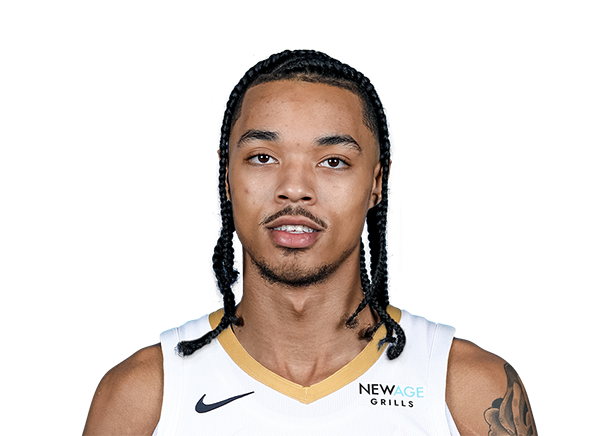
Boston won by attacking without sharing: the team that turns the ball over the least in the entire NBA is also one of the ones that assists the least. The upgrade for 26-27 isn't another scorer — it's collective creation, and Brandon Boston Jr.'s profile doesn't cover it.
- 1st in turnovers, 27th in assists
- Pritchard matches White in ball control
- Boston Jr. creates for himself, not for others
Before answering the question, an honest correction to the premise: our data does not record a Boston Celtics season without Jayson Tatum. Quite the opposite: in this season's official tracking, Tatum appears as the team's third-highest ball-usage player and the first in assists. We also don't have last season's rankings for a direct comparison. What we can do, with data nobody else cross-references, is X-ray how Boston attacked, who stepped up, and what's missing for 26-27.
An attack that gives nothing away — but doesn't share much either
The 56-26 record was built on three pillars that our team panel makes crystal clear: nobody in the NBA turns the ball over less than Boston (1st of 30), their three-point shooting is among the league's best (8th), and they're the third-best rebounding team. The crack is in the fourth stat: 27th in assists.
That combination tells a specific tactical story. Few turnovers and few assists at the same time usually means a minimal-risk attack: shots generated off the dribble and off the glass, not off the pass. Boston doesn't manufacture baskets by moving the ball — it manufactures them by not losing it. It works, but it's a ceiling.
The step forward has a name: Pritchard
A change in roles? The official tracking draws it out. Derrick White handles the ball 5.4 minutes per game with 5.4 assists, and Payton Pritchard is practically right there with him: 5.2 minutes and 5.2 assists. A natural backup handling as much of the ball as the starting point guard is this roster's real step forward. Tatum, with less possession time (4.6 minutes), is the most productive when he has it: 6.8 assists per game.
In other words: the creators exist. What the system fails to do is turn all that individual creation into assists for the rest of the team. That's where the improvement lies, not in talent.
If I were coaching Boston in 26-27
The confirmed departure of Jaylen Brown to the 76ers removes scoring shoulders, but the current roster is full of hands that know how to pass: White, Pritchard, Mike Conley, Jrue Holiday. The raw material for passing is in the locker room; what's missing is for the attack to use it. The tactical recipe is specific: keep the turnover discipline — which is gold and is identity — but raise the volume of shots generated by passing, leaning on the three-point shot (8th in the league) as the natural destination for that ball that doesn't travel today. Our season model, with 80 games already decided, places the team in the 44-56 win band: the room for improvement isn't in winning more games, it's in sharing the ball better.
And where does Brandon Boston Jr. fit into this?
He's the name that surfaces when you cross-reference "Boston" in our database, and he deserves an answer as a hypothesis for 26-27: is he the piece that fixes the above? No.
His profile is that of a pure scoring role player off the bench. In the G League he's been a hammer: 18.7 points per game across 38 games, with 47.9% shooting from the field and a notable 37.2% from three on 164 attempts. But in that same league he barely dishes out 2.2 assists and gives up 1.14 turnovers for every assist: he creates for himself, not for others. The exact opposite of what Boston needs. Our internal GOAT index paints the same picture: 6.5 on the scale, no peaks or accolades in four seasons.
And his NBA impact this season — recorded on his current team, not Boston — doesn't invite optimism either. In 42 games at 23.6 minutes, his team has clearly been worse with him on the floor, with the obligatory caveat that that figure is shared with the other four players on the lineup.
On defense, matchup tracking adds another red flag: the opponents he guards shoot noticeably better than they should — though part of that could be scheme-related or about who he happened to guard, the number doesn't help.
What Boston gains with a profile like this
- ✓instant scoring off the bench
- ✓outside shooting proven in the G League
What it doesn't buy
- ✕the collective creation the attack is missing
- ✕proven defensive impact
Boston barely turns the ball over because it barely passes it.
26-27 will be won by turning a minimal-risk attack into one that shares — and that piece, if it arrives, will have to be a passer, not another scorer.
Sources and method
- Competitions in the data
- NBA · G League
- Method
- Figures come from SportiveWorld's own database and from the documents cited in the piece. Every figure states its metric, scope and period; what is not measured is said, not filled in.
This article was produced with the help of artificial-intelligence tools on verified data from our own database, and was reviewed and edited by a human (Antonio Sierra) before publication.