
SGA doesn't need the three: he lives where the NBA stopped looking
The mechanism, with official tracking and our database: ball monopoly as a skeleton key, almost no assisted shots, and a mid-range game that converts eight points above the league average.
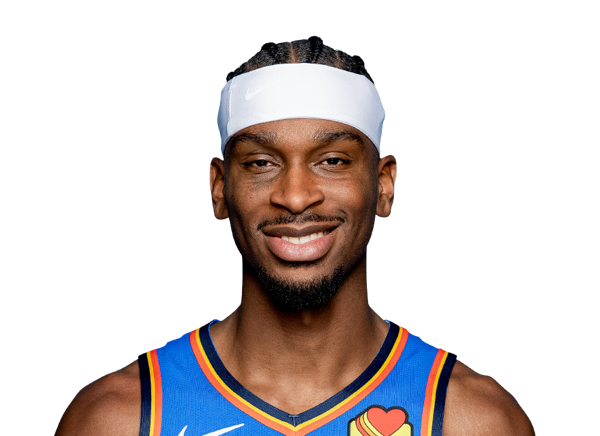
SGA's mechanism is ball monopoly: he holds and dribbles more than almost anyone to manufacture his shot in a zone the league abandoned, and there he converts at a level that makes the three optional.
- Dribbles triple the median
- Four in ten shots, mid-range
- There he shoots 8 points above the league
- 5.5101FactTHE SKELETON KEYdribbles per touch
Nearly triple the league median of 1.9: he manufactures the shot dribble by dribble
- 0.4702FactTHE TAX THAT ISN'Tpoints per touch
Against a median of 0.29: all that ball doesn't translate to empty possessions
- 6.503FactCLUTCH MINUTESclutch points, vs. 3 in 2024-25
More than double last season, though we're measuring volume, not efficiency
2024-25
The NBA has spent a decade calling the mid-range shot a relic. Shai Gilgeous-Alexander has built the second-highest scoring average in the entire league on top of that relic: 31.1 points per night, trailing only Luka Dončić, with fewer than one in five shots attempted from three. The question isn't how much he scores. It's how he gets — time and again — exactly where he wants to go.
The mechanism starts long before the shot. Official tracking makes it clear: SGA has the ball in his hands more than almost any player in the NBA (6.3 minutes per game, while the league rotation median is 2) and dribbles per touch nearly triple the league average. Every possession of his is a pick: he catches up top, shifts tempo, and the dribble works like a skeleton key until the door to his zone swings open.
The shot isn't given to him — he manufactures it
There's one small data point that captures the mechanism better than any big one: 17 corner threes in all of 2024-25, just 1% of his shots. The corner is catch-and-shoot territory — shots someone else sets up for you. SGA barely sets foot in that world: virtually everything he launches, he's cooked up himself off the dribble. He made them at 52.9%, but on 17 attempts that's a footnote, not a trait.
And the profile came with him. Our database only has 4 of his college games, a minimal sample that doesn't support performance conclusions, but the trait is already there: at Kentucky, just 16.7% of his shots were threes. Different leagues, incomparable samples. The DNA, the same.
The zone the league declared dead
Here's the heart of it, pulled from our database with 2024-25 data: 41.4% of his attempts came from mid-range, and he converted them at 51.8% while the league shoots 43.5% from that same zone. Eight points above. No other number better explains why he doesn't need the three: his straightaway three sits right at the league average (35.8%), so it's not that he can't shoot it. It's that he has something better.
His shot chart completes the picture: between mid-range, the rim, and the paint, he concentrates more than eight in ten attempts, and at the rim he also converts above the league average. The three, on his menu, is dessert.
Is all that ball-handling worth it?
The logical suspicion is that so much monopoly comes with a tax. The numbers say otherwise: his true shooting percentage is 66.5% this season, and with him on the floor the Thunder dominate. Mind the fine print: net rating is a team number — there are four other players in there — but the size of the margin is hard to ignore.
And he doesn't just attack and coast: the shooters he guards drop four points below their normal shooting percentage, with the caveat that this stat assigns the shot to the nearest defender and ignores help defense and scheme.
Our Signal tool adds one final layer: this season he's shouldering clutch-time minutes far more than last year.
What we can't tell you, we say so: our play-type breakdown isn't available for this piece, so the exact split between isolation and pick and roll stays out. The mechanism that is measured is this: ball, dribble, his zone.
What OKC gains
- ✓Self-generated scoring that doesn't depend on outside shooting
- ✓More weight in tight late-game situations than in 2024-25
- ✓A defense that cuts opponents' shooting percentage
What it doesn't buy
- ✕A real corner threat — 1% of his shots
- ✕Proven clutch efficiency — the signal measures volume
SGA isn't avoiding the three: he dribbles his way into the zone the league declared dead and has turned it into his edge.
The mechanism is easy to describe and nearly impossible to copy: ball monopoly, patience, and 51.8% where the NBA shoots 43.5%. As long as that holds, in Oklahoma City the three will keep being optional.
Sources and method
- Competitions in the data
- NCAA · NBA
- Seasons in the data
- 2024-25
- Method
- Figures come from SportiveWorld's own database and from the documents cited in the piece. Every figure states its metric, scope and period; what is not measured is said, not filled in.
This article was produced with the help of artificial-intelligence tools on verified data from our own database, and was reviewed and edited by a human (Antonio Sierra) before publication.