
Pritchard's gamble: improve before you sign
The point guard has turned down a short-term extension talk with the Celtics, and the numbers back him up: his impact already outstrips his contract, and his room for growth sits exactly where he says he wants to work.
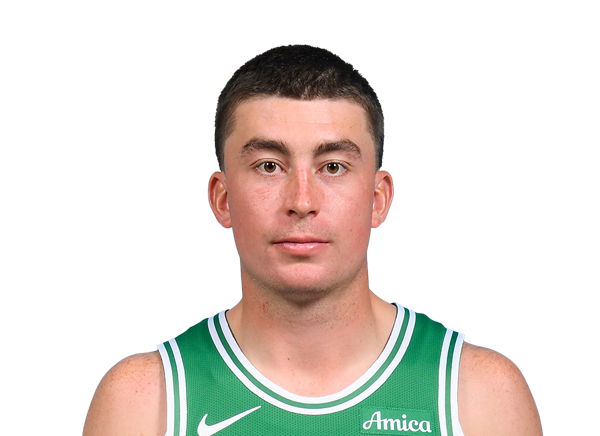
Pritchard sets the extension aside, and the numbers back him up: his impact is already worth more than his contract, and his room for growth is pinpointed in one very specific spot.
- Starter-level impact at a role-player price
- Still untapped value per touch
- Boston needs his playmaking
- +801FactREAL IMPACTnet rating
consolidated-starter production with a 58.4% true shooting mark
- $7.2M02FactCURRENT PRICEsalary this season
role-player pay for a 32-minute workload
- 0.2503FactIDENTIFIED ROOM FOR GROWTHpoints per touch
he commands the ball like a star and still cashes it in like an average player
There are players who chase the front office, and players the front office chases. Payton Pritchard is now the latter: according to Dana Gauruder, the point guard has turned down short-term extension talks with the Boston Celtics. His reported explanation is simple: he'd rather focus on improving his game.
And here's the interesting part: once you run the numbers, the decision stops sounding like a cliché and starts looking like a plan.
A contract he's outgrown
Pritchard is no longer the bench spark plug he once was. This season he's playing more than 32 minutes a night across 79 games, he's the third-highest usage ball-handler in the rotation, and according to our internal historical model, 2025 is by far his best season. The profile his radar draws is that of a high-volume creator, not a specialist.
The number that sums it all up is impact: with him on the floor, the Celtics outscore opponents by 8 points per 100 possessions, with a 58.4% true shooting mark. That's consolidated-starter production. And he's being paid $7.2 million this year, within a deal worth $23.3 million through 2028. Signing an extension now would mean negotiating from his old price tag, not from his current production.
A lot of ball-handling, less return than it should bring
Here's the tactical reason behind his "I'd rather improve." Pritchard holds the ball far longer than the league-average point guard: he spends 5.2 minutes per game with the ball in his hands when the norm is around 2, and he takes 4.5 dribbles per touch versus the league median of 1.9. In terms of handling volume, he's a primary creator.
But the return still doesn't match that volume: he's generating 0.25 points per touch, below the league norm (0.29). Translation: he commands the ball like a star and cashes it in like an average player. That gap between what he handles and what he produces is exactly the room for improvement he says he wants to attack. His shot chart tells you where that improvement could come from.
It's not a mechanics issue: back at Oregon, half his shots were already threes and he posted more than two assists per turnover. The raw material was always there; what's left to polish is the return on every possession that runs through his hands.
The fine print: defense
If the bet has a hole, it's on the other end. Across a wide sample of nearly 800 shots defended, opponents shoot slightly better against him than they typically shoot overall. It's not a disaster, but it's not an argument for the negotiating table either, and it's worth saying so.
Boston needs him more than ever
Looking around only strengthens his position. These Celtics win 56 games while turning the ball over less than any team in the NBA, yet they rank 27th in assists: they generate little offense for others. And after the confirmed trade of Jaylen Brown to the 76ers, playmaking is now concentrated in three pairs of hands: Derrick White, Jayson Tatum, and Pritchard himself, who already handles nearly as much as White. There's no redundancy here: there's dependency.
Waiting, besides, isn't a leap into the void: right now there are several teams with more than $20 million in cap space, and point guards with proven impact never go out of style in that market. It's a scenario, not a promise, but it explains why the urgency to sign belongs to Boston, not to him.
The risk is real: an injury or a bad year would turn this wait into a costly mistake. But with impact that outstrips his salary and room for growth so clearly pinpointed, delaying the signature isn't arrogance. It's reading his own numbers.
What Pritchard gains
- ✓Negotiating from his best season
- ✓Time to close the efficiency gap
- ✓A future market with money
What it doesn't buy
- ✕Protection if he gets injured or has a down year
- ✕A defense that doesn't add arguments today
Pritchard isn't turning down money: he's refusing to sign, at a backup's price, what's already producing like a starter.
If he closes the gap between what he handles and what he produces, the next negotiation will happen with very different numbers on the table. And in Boston, they know it.
Sources and method
- Method
- Figures come from SportiveWorld's own database and from the documents cited in the piece. Every figure states its metric, scope and period; what is not measured is said, not filled in.
This article was produced with the help of artificial-intelligence tools on verified data from our own database, and was reviewed and edited by a human (Antonio Sierra) before publication.